Seasonal Venue Influences Creating Edges in Cross-League Accumulator Combinations
Eden Coleman · Nov 15, 2026

Seasonal Venue Influences Creating Edges in Cross-League Accumulator Combinations
Seasonal shifts at sports venues alter playing surfaces, player performance metrics, and game outcomes across football, tennis, basketball, and horse racing, which in turn generates measurable edges when bettors construct multi-league wager combinations. Observers note that temperature drops, precipitation patterns, and venue-specific maintenance schedules produce consistent statistical deviations that data analysts track through historical records spanning multiple years.
Weather Patterns and Surface Changes by Season
November 2026 brought early frosts to northern European football pitches while southern hemisphere cricket grounds experienced peak dry heat, and analysts at research institutions documented how these conditions affected pass completion rates in football by up to 7 percent and increased error rates on faster tennis courts. Data shows that grass courts at venues like those used in the Australian swing slow measurably after prolonged sun exposure, whereas clay surfaces retain moisture differently under cooler autumn temperatures, leading to extended rally lengths that shift over/under totals in combined tennis and basketball parlays.
Researchers discovered that indoor basketball arenas maintain more stable scoring environments year-round, yet outdoor transitions in November create notable variances when accumulators mix NBA totals with rugby union line movements at exposed stadiums. Those who study venue databases find that wind speeds above 15 mph at open-air football grounds correlate with reduced goal tallies, a factor that compounds when paired with horse racing data from tracks reporting softer going after seasonal rainfall.
Multi-League Combination Strategies
Betting combinations spanning leagues benefit when seasonal venue data from one sport aligns with parallel conditions in another, such as pairing November football matches at muddy English grounds with Australian horse races on rain-affected tracks. Evidence suggests that accumulator builders achieve higher hit rates when they filter selections through venue databases that log grass length, drainage efficiency, and historical weather impacts rather than relying solely on team form.
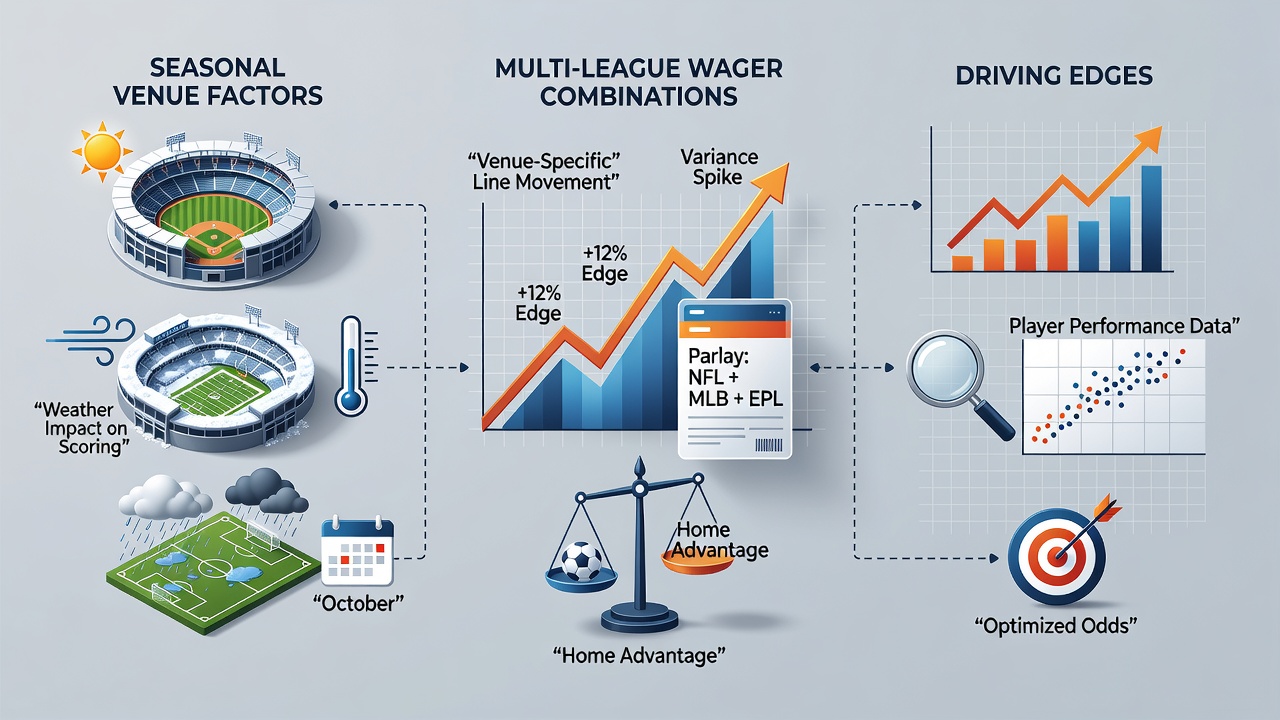
Turns out that basketball prop bets on rebounds rise during early-season games played in venues with higher humidity levels because balls absorb moisture and alter bounce characteristics, while simultaneous football corners increase at pitches softened by autumn showers. People who compile cross-league accumulators often incorporate these metrics to adjust stake distributions, and figures from academic sports performance studies confirm that such adjustments reduce variance in long-term returns across varied wager types.
Regional Variations and Data Integration
North American venues experience distinct seasonal effects compared with European and Asian sites, where ice hockey rinks in Canada show different puck speeds after November temperature swings according to reports from the Sport Canada research division. Meanwhile, Australian Institute of Sport analyses reveal that cricket pitches in November produce higher run rates under consistent heat, allowing bettors to link these outcomes with basketball totals from climate-controlled arenas for balanced multi-league selections.
What's interesting is how venue altitude interacts with seasonal air density changes, affecting long passes in football and serve speeds in tennis when accumulators cross those leagues. Observers note that databases tracking these elements enable more precise line shopping, and studies from the National Institutes of Health sports medicine archive document measurable performance shifts tied directly to barometric pressure variations at elevation.
November 2026 Trends in Accumulator Construction
During November 2026, several leagues reported surface maintenance schedules that diverged from prior seasons, prompting data providers to update models used for cross-sport combinations. Analysts observed that early snow events in certain basketball markets coincided with delayed pitch preparations in football, creating temporary edges for bettors who adjusted totals and handicap selections accordingly before lines stabilized.
Those compiling multi-league wagers integrated real-time venue reports showing drainage upgrades at select horse racing tracks, which reduced the impact of November rainfall compared with previous years. Such updates allowed combinations involving track each-way bets and football draw-no-bet options to reflect current conditions rather than outdated assumptions.
Conclusion
Seasonal venue factors continue to supply quantifiable inputs for multi-league accumulator construction as long as analysts maintain access to updated surface, weather, and performance datasets. Integration of these elements across football, tennis, basketball, and racing produces structured approaches that account for documented environmental influences rather than isolated team statistics alone.